
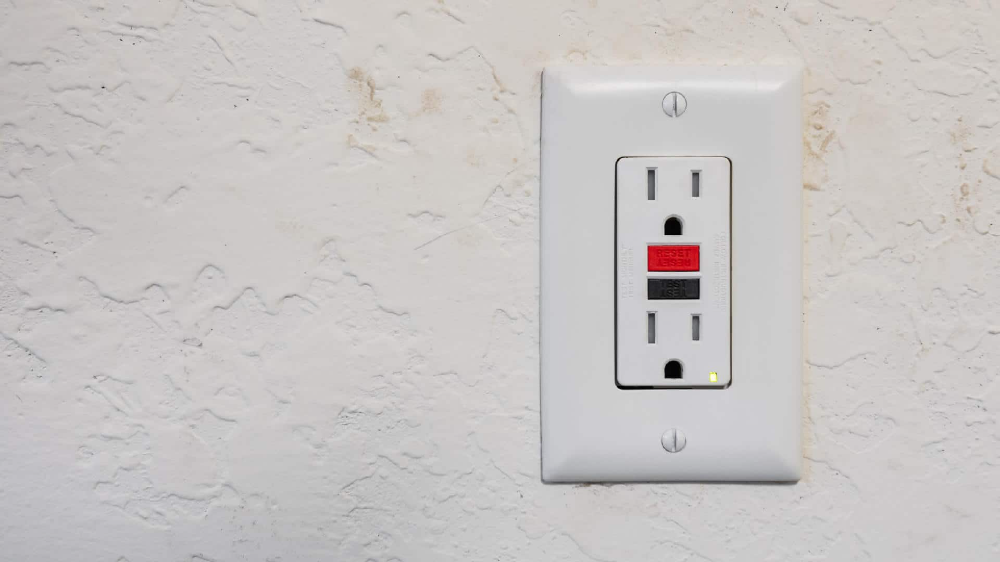
A GFCI outlet tripping repeatedly is one of those small annoyances that’s easy to dismiss — until it starts happening every few days, or right when you need that outlet most. GFCI (Ground Fault Circuit Interrupter) outlets are designed to protect against electrical shock by cutting power the instant they detect a ground fault, and while that protection is exactly what you want, frequent tripping usually points to an underlying issue worth understanding. Here are three of the most common causes.
1. Moisture in the Outlet or Nearby Wiring
GFCI outlets are most commonly installed in kitchens, bathrooms, garages, and outdoor areas — exactly the spaces where moisture is most likely to be present. Even small amounts of humidity, condensation, or water intrusion into the outlet box can trigger a ground fault trip, since the GFCI is specifically designed to detect current leaking to ground, which moisture readily creates. Outdoor outlets are especially prone to this if weatherproof covers aren’t sealing properly, and older homes sometimes have outlet boxes that weren’t fully sealed during original installation.
2. A Faulty or Aging Appliance
Sometimes the GFCI outlet itself isn’t the problem — it’s correctly doing its job by responding to a fault in whatever’s plugged into it. Appliances with worn insulation, damaged cords, or internal wiring issues can create small current leaks that a GFCI will detect and respond to by tripping. This is common with older appliances, hair dryers, space heaters, or anything that’s been dropped, exposed to moisture, or used heavily over time. If the outlet only trips when a specific device is plugged in, that device — not the outlet — is usually the source of the problem.
3. A Worn-Out or Failing GFCI Outlet
Like any electrical component, GFCI outlets don’t last forever. Over years of use, the internal sensing mechanism can degrade, leading to nuisance tripping even when there’s no actual ground fault present. Most manufacturers recommend testing GFCI outlets monthly using the built-in test button, and if an outlet fails to reset properly or trips without any clear cause, it may simply be reaching the end of its functional lifespan and need replacement.
How to Narrow Down the Cause
A simple way to start diagnosing the issue is to notice the pattern: does it trip only in certain weather (pointing toward moisture), only when a specific device is plugged in (pointing toward that appliance), or seemingly at random with nothing obvious plugged in (pointing toward the outlet itself aging out)? While this can offer a starting clue, GFCI troubleshooting sometimes involves checking wiring connections and testing for ground faults with equipment most homeowners don’t have on hand — which is where a licensed electrician’s diagnosis becomes valuable, especially since working inside an outlet box involves live electrical components.
Comparison of Common Causes
| Cause | Typical Pattern | Fix |
|---|---|---|
| Moisture intrusion | Trips in humid weather or near water sources | Seal outlet box, replace weatherproof cover |
| Faulty appliance | Trips only when specific device is plugged in | Repair or replace the appliance |
| Aging GFCI outlet | Trips randomly with no clear pattern | Replace the outlet |
| Wiring issue | Trips consistently despite no obvious cause | Requires professional inspection |
| Overloaded circuit | Trips under heavy simultaneous use | Redistribute load or upgrade circuit |
Why You Shouldn’t Ignore a Tripping GFCI
It can be tempting to just reset the outlet and move on, but a GFCI that trips repeatedly is communicating that something isn’t right, even if the cause seems minor. Continuing to use an outlet with an underlying fault — especially in a kitchen, bathroom, or outdoor space — can leave you without the shock protection the GFCI is meant to provide if the outlet itself is failing. Addressing the root cause, rather than just resetting and hoping it doesn’t happen again, protects both your electrical system and your household’s safety.
When to Call a Licensed Electrician
If you’ve ruled out an obvious cause — no appliance seems to trigger it, there’s no visible moisture issue, and the outlet still won’t reset reliably — it’s time to bring in a professional. This is especially true if the tripping is frequent, if you notice warm outlets, discoloration, or a burning smell, or if the outlet won’t reset at all. These can be signs of a wiring issue beyond the outlet itself, which requires proper diagnosis to address safely.
Frequently Asked Questions
1. Is it normal for a GFCI outlet to trip occasionally?
Occasional tripping, especially in damp conditions or with older appliances, isn’t unusual. Frequent or unexplained tripping is what signals a deeper issue worth investigating.
2. Can I replace a GFCI outlet myself?
While it’s technically possible for someone comfortable with basic electrical work, GFCI outlets involve specific wiring configurations, and improper installation can compromise the safety protection they’re meant to provide. Professional installation is generally recommended.
3. How often should GFCI outlets be tested?
Manufacturers typically recommend testing GFCI outlets monthly using the built-in test and reset buttons to confirm they’re functioning properly.
4. Do all outlets need to be GFCI protected?
Building codes generally require GFCI protection in kitchens, bathrooms, garages, unfinished basements, and outdoor areas, though requirements can vary by location and by when the home was built.
5. How long do GFCI outlets typically last?
Most GFCI outlets last 10 to 15 years, though this can vary based on usage, environmental exposure, and the quality of the original installation.
Conclusion
A GFCI outlet that keeps tripping is usually pointing to one of a few common causes — moisture, a faulty appliance, or a worn-out outlet — but pinpointing which one it is isn’t always straightforward without a proper inspection. If you’re dealing with recurring GFCI tripping at your home or business, getting it diagnosed correctly protects both your electrical system and your family’s safety. Hurley Electric LLC — contact us today for a professional electrical inspection in Mebane, NC and the surrounding areas.